The Harpy Displayed
“The Field is Azure, a Harpy displayed, Crined, Crowned, and Armed, Or. These are the Arms of the noble City of Norenberga, which, according to some authors, is situated in the very Center of the vast and spacious Country of Germany. The Harpy… should be given to such persons as have committed manslaughter, to the end that by the often view of their Ensigns they might be moved to bewail the foulness of their offense.”
— A Display of Heraldrie (1611)

This is the first in a series of articles on the wonderful art of armory — what most folk call heraldry, though they’re not exactly synonymous, as we’ll see. Arthur Charles Fox-Davies, the early 20th century’s resident heraldic expert, had a thing or two to say about that back in the day. More on that next time.
AHELLUVA THING to do to a knight.
John Guillim’s A Display of Heraldrie, first printed in 1610 and the go-to English reference on arms for more than a century after, has lots of little gems like this. But this one hits harder. The harpy on the shield isn’t just a fanciful decoration. It’s a verdict. Somewhere in the bearer’s past is a killing the Duke’s Bench deemed unlawful, so the Brackenwold King of Arms imposed this device as part and parcel of the duke’s justice. In a fantasy world where harpies are real, anyone can spot the silhouette at fifty paces — even a lowly swineherd knows the shape. What folk might not know is what it means.
Importantly, the charge doesn’t represent a cold-blooded killer. “Manslaughter,” in this tradition, was an unlawful killing without malice aforethought. Maybe it started as a tavern brawl and ended with steel. Or a duel that went sideways. Or just one punch too many in a fight that never should’ve happened.
The Hall Has Opinions
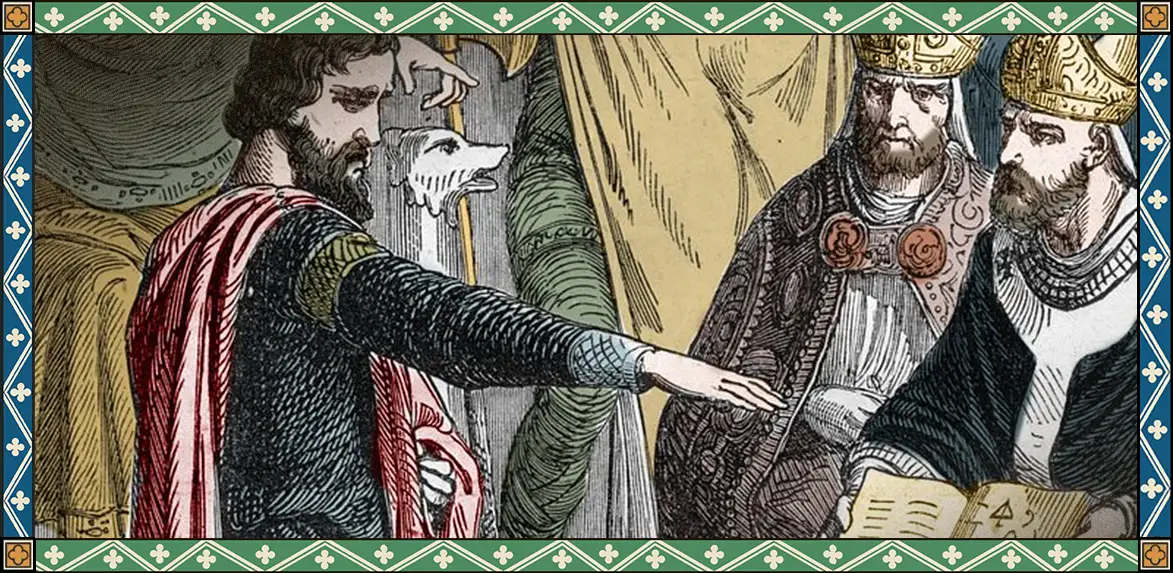
Our “harpy knight” might be honorable in every other way, and most folks in the hall will treat him accordingly. But reactions will vary — some lords eye him warily, while others nod with a sort of grim respect for a man who bears his guilt stoically. The learned priest offers sympathetic prayers, while the ladies keep their distance. Children might point and whisper, while a crusty old man-at-arms slaps his back and says, “We’ve all got shadows, lad.” A few won’t be so generous — the kin of the slain man, an old rival, the priest who refused him absolution — any of them is a sub-plot waiting to happen.
A Lever for Play
The real lever for the Referee isn’t secrecy. This man can’t just stroll into a hall and blend in. Either his reputation gets there first, or his shield does the talking for him. Locals already know the story. Travelers and foreign PCs will hear it soon enough over dinner, or figure it out on their own. He makes a great brooding penitent NPC, a fallen hero whose grief finally makes sense, or a Player Character with a built-in millstone. Maybe he’s even a younger sibling — the original sinner long gone, but the arms passed down with the rest.
As in Guillim’s description of the harpy above, a civic angle is possible too. She might fly over a delegation from [insert city name from your campaign here] itself. No punishment angle here, just the city’s old device, owned with a certain civic pride.
We’ve put a face to this idea ourselves. Sir Gawaine Harrowmoor, a household knight in the service of Duke Brackenwold, wears these arms for exactly the reason Guillim describes. If you’d like a ready-made example to drop into your Duke’s Tourney, he’s already at the lists.
All of which raises a question for next time. How does a knight actually read another man’s arms at sight? What does the shield really say about the man behind it? Part Two takes up the question of how characters actually read a shield — stay tuned.
See You in the Lists!
Knights of the Wood: The Duke’s Tourney contains complete rules for jousting, sorcery competitions, feasting, dancing, and everything else you could possibly need to run tournaments in Dolmenwood. Need to generate knightly competitors? Check out our free Dolmenwood Knight Generator.


Leave a Reply