Part I of Vows, Oaths, and Geasa
This kicks off a three-part series on what it really means to make a vow as a Dolmenwood knight — and what happens when you do. Next up, we’ll dig into Saintly Oaths, those weighty, long-term promises you make on a saint’s name. After that, we’ll get into Fairy Geasa, which aren’t exactly optional.
THE KNIGHT IN SHINING ARMOR is an iconic archetype of the fairy tale genre, and a natural fit for Dolmenwood. Strong fighter, early access to good armor, built for mounted combat and monster-slaying, and possessing an iron will. Check, check, check, and check.
And yet…
Spend any time in the OSR corners of the internet, and you’ll find the complaint. Actually playing a knight can feel a little less-than. (Not that The Goode Knyght thinks that, mind you; we’re actually quite happy with the design as-is. Well — mostly happy— but we digress. We’ll return to this topic in a future post.)
That’s why, in Knights of the Wood: The Duke’s Tourney, we introduced the Vow of the Peacock, a diegetic mechanic straight from the chivalric playbook that gives knights a sharp edge without breaking the game. This article covers where the Vow comes from and how to get the most out of it at your table. It also sets up the next two articles, which will toss a few more tricks (and traps) into the Referee’s bag.
The Vow of the Peacock
If you want to know how medieval knights thought about honor, this majestic bird says it all. And subtlety is not on the menu.
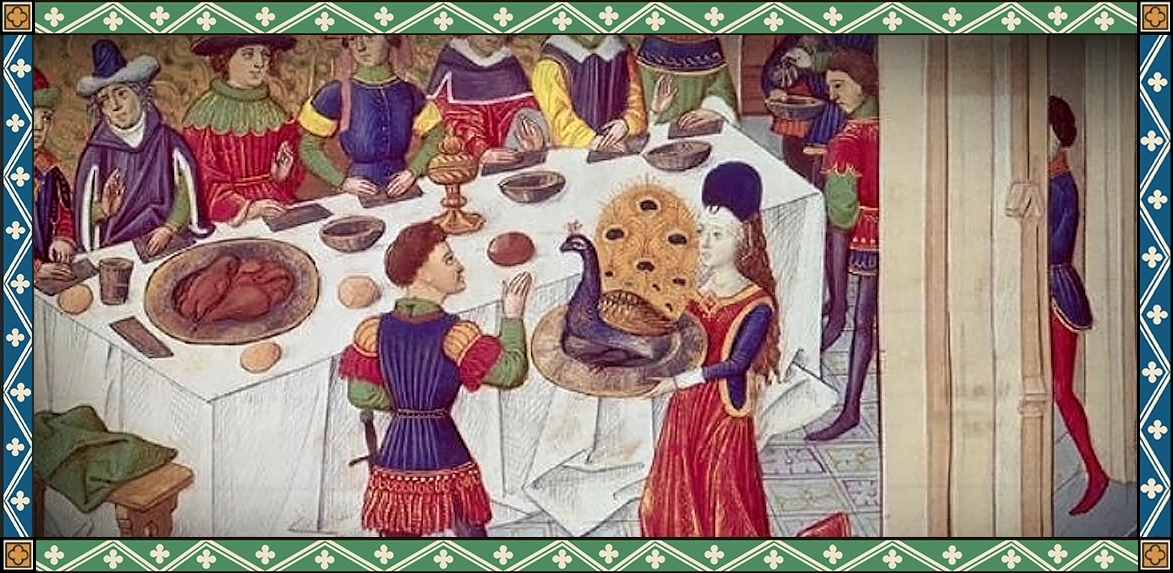
This isn’t just any old fowl, tossed on a plate. After roasting, the cooks sew its feathers back on, fan out that extravagant tail, and march it into the great hall on a silver platter, trumpets blaring. All eyes are on the bird.
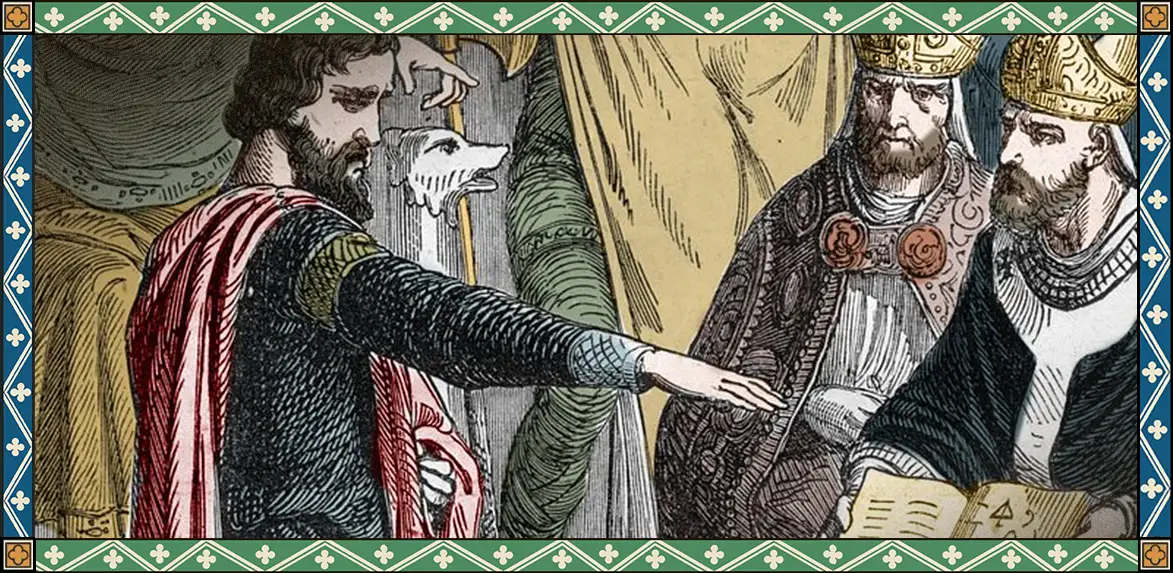
The Champion of the Joust goes first, oath sworn out loud, in front of every noble, knight, and lady worth impressing. Then it’s the rest of the tournament’s named players, one at a time, each swearing over the peacock before the carving starts. One knight vows to unhorse the man who beat him last spring. Another vows to win the mêlée for the lady watching from the gallery. When the final vow is out, and before anyone picks up a knife, the whole room acclaims the boldest one: chivalry’s version of Best in Show.
Nothing keeps a knight honest like an audience.

The Bird and What It Meant
The peacock was all about pride, which, in medieval times, was supposed to be a sin. Didn’t stop knights from building their whole culture around it, though: honor only matters if you care about your reputation. The bird also stood for incorruptibility, since supposedly, its flesh never rotted. Swearing on the peacock meant you were making a promise that wouldn’t go bad.
The most famous literary version is the Vœu du Paon, a French verse romance written for the court of Liège in the early fourteenth century, in which Alexander and his companions swear vows on a peacock. History joined in, too. At the Feast of the Pheasant in 1454, Philip the Good of Burgundy and his nobles swore crusading vows over a live pheasant wearing a jeweled collar. Whether the crusade ever sailed is beside the point.
These vows are public and competitive. You’re staking your reputation in front of your peers, your lord, and anyone else who counts. Refuse to swear, and you’re also making a statement. Just not the kind you want.
Binding Your Future Self
Knightly vows aren’t supposed to be easy. You’re promising to do something gutsy: capture that enemy, be first through the gate, take down the knight who beat you last time. The tougher the vow, the more honor you earn. It’s a way to lock your future self into a decision you made when the adrenaline was high. Medieval folks knew that the guy who swore to smite his enemies tonight might not feel so brave in the morning. The public oath kept him honest.
The Vow of the Peacock runs on social pressure. Sure, the One True God might be keeping score, but in Dolmenwood, it’s your peers who actually remember.
The Vow in Dolmenwood
The Duke’s Tourney has its own spin on the ancient tradition, tied to the feast of St Dougan at the end of the tournament. The Champion of the Joust carves the peacock and swears first, then everyone else goes in order of rank. It’s the same idea: make your promise in public, let your peers watch, and put your honor on the line.
Swear the Vow in front of the hall, and it holds: +1 to every Check, Attack Roll, or Saving Throw made in direct pursuit of the goal, plus one re-roll a day, for as long as you’re chasing it.
The penalties hit your reputation first. If you drag your feet, people notice. The -1 penalty (see The Vow of the Peacock: Delaying, p. 27 of Knights of the Wood: The Duke’s Tourney) applies to Charisma Checks and Reaction Rolls with all nobles, including knights and ladies, reflecting flagging confidence and growing doubt. Walk away from the vow, and you’re branded an Oathbreaker. Your Renown drops to Level -2. There’s no taking back a Peacock vow. You either finish it, or you don’t.
WHAT IS RENOWN?
Renown tracks how the world sees your knight, scored in Levels from -4 to +4. Each Level maps directly to a Reaction Roll bonus or penalty: at Level -2 you’re taking a -2 hit to every impression you make; at Level +3 you’re getting a +3 bump. In Dolmenwood, reputation does real work. For the full rules, see Knights of the Wood: The Duke’s Tourney, pp. 44–45.
Aim for something with an actual shape to it: a name, an obstacle, a deadline. “I swear to unhorse Sir Treeve Underlow in the mêlée before the noontide on the morrow,” is a vow the table can watch a knight work toward. “I swear to bring peace to Dolmenwood” is not.
KNIGHTS ONLY
The Vow of the Peacock is strictly for knights, baked right into the chivalric culture of Brackenwold and tied to the Renown system that makes the class tick. The next two mechanics are a different beast. Saintly Oaths are open to any true believer in the Pluritine faith, and Fairy Geasa couldn’t care less what class you play…
Next Time: Vows, Oaths, and Geasa — Part II: Saintly Oaths: A Chance to Show Your Quality


Leave a Reply