
Part III of Vows, Oaths, and Geasa
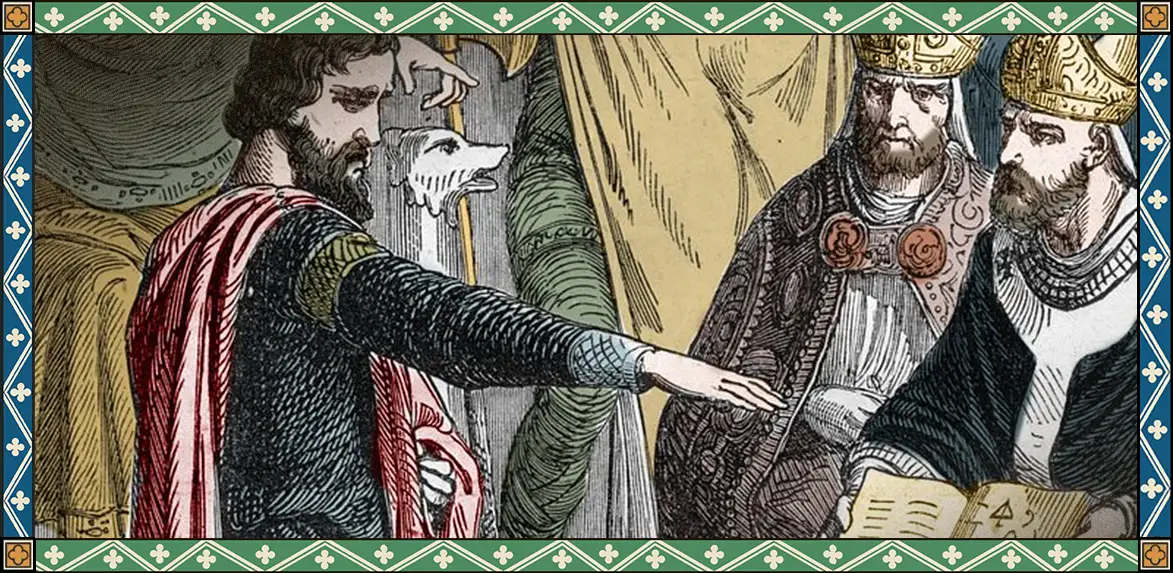
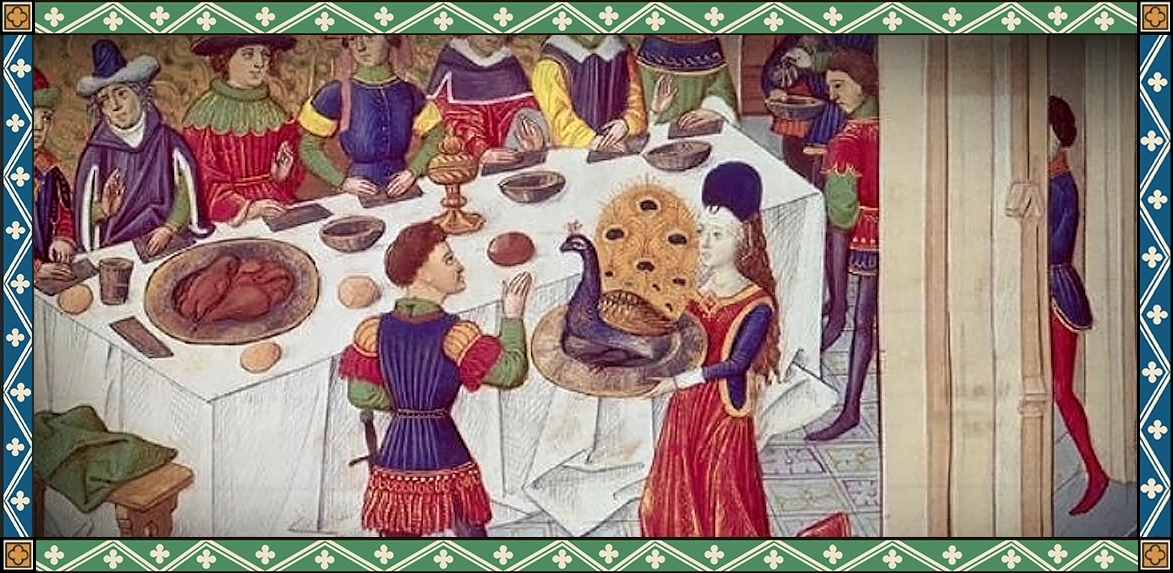
This is the last article in our series on what happens when Dolmenwood knights make (and break) promises. If you missed the earlier parts, Part One took another look at the Vow of the Peacock, and Part Two dug into Saintly Oaths. In both cases, the knight made the pledge of their own free will. But as you’ll see, some promises show up wrapped in shiny paper and are a lot harder to turn down.
AVOW PUTS A KNIGHT’S CHARACTER to the test, and an oath sworn before a saint tests their faith. A geas isn’t a test at all. It’s a gift that fate can turn against them. The old Irish tales are full of heroes saddled with geasa, prohibitions laid on them at birth or by a druid, a king or a lover, sometimes with a boon attached. Problem is, if an enemy finds out about your geas, they can use it to set a trap for you.
Take Cú Chulainn, the great hero of the Ulster Cycle, whose name means “Culann’s Hound.” Fittingly, he was forbidden from eating dog flesh, but, oddly enough, also forbidden to pass a cooking fire without sharing in the meal. Toward the end of his story, he came across three hags roasting a dog by the road he was traveling. They invited him to eat. No matter what he did, the hero broke a geas. He died in battle shortly afterward. That’s the old lesson of the geas: the greater the hero, the more obligations they carry, and the more ways fate can set them against each other.
This weird and seemingly rando combination of gift and curse feels right at home in Dolmenwood, whose fairy lords love to hand out favors. But there are always strings attached—and those strings always seem to matter most when you least want them to.
The greater the hero, the more obligations they carry, and the more ways fate can set them against each other.
How a Geas Finds You
Nobody goes looking for a geas. Usually, a fairy noble lays one on you, thinking they’re doing you a favor. Sometimes, they know exactly what they’re up to. In Dolmenwood, a knight usually ends up with a geas in one of four ways.
A bargain: Every agreement made with a fairy lord comes with fine print. If you ask a fairy noble for help, safe passage, or a favor, the geas is the portion of the price they never mention. It’s how you pay for the Earl of Yellow’s warmth or Prince Mallowheart’s amusement.
A trespass: If you wander into a fairy lord’s hunting ground, take a drink from the wrong well, or show up at a dance you have no business attending, then the lord might decide that you owe them for the privilege. A geas is one way fairies collect on a debt.
A gift: Sometimes a fairy simply takes a liking to you — for example, if you solved a riddle, sang well at a fairy feast, or showed kindness to one of their creatures. As a result, you receive a gift, and the geas is attached to it, even if you wanted neither the gift nor the geas.
A birthright: A character can start play with a geas laid at their cradle, perhaps by a fairy who showed up uninvited at the naming feast and spoke the terms before the whole hall. It’s a fine hook for a background. Roll or pick one from the list below. Consent is built in there, since the player picks the geas when making the character.

The Fine Print
However it happens, the fairy states the terms aloud—once, and rarely in plain language. That’s fairy etiquette for you, and it’s about the only courtesy you’ll get. A knight can carry more than one geas, but no fairy noble will stack a second on top of their own. And you don’t get to refuse. The moment the terms are spoken, the geas sticks.
That’s the knight sorted. The player’s a different story. Always talk it over with them before dropping a geas on their character. If they’re up for it, great. If not, skip it.
Once a geas lands, make sure the player knows exactly what they can’t do. The fairy might be coy, but you as Referee shouldn’t be. If the player knows the Prohibition, they’ve got something to work around for sessions to come. If they don’t, it’s just a gotcha—and nobody likes a gotcha at the table.
Fairy Geasa
Pick a geas that fits the fairy and the situation, or just roll a d10 if you want to keep things random. Most of these Prohibitions are just a nuisance at first. They only get dangerous when the stars align against you—and in Dolmenwood, that happens more often than you’d like. If a knight’s made deals with both Duke Mai-Fleur and Princess Andromethia, sooner or later they’ll hear the horns while standing on the edge of a barley field.
Every entry has three components. The Power is the gift given by the fairy that you can use so long as you adhere to the terms. The Prohibition is the rule you must follow. Breaking the Prohibition describes the action the fairy takes when you fail to comply.
Making Amends
If you break a Prohibition, the Power stops working, but the Prohibition still applies. You also suffer the consequence of breaking it. If you break it again, you suffer the consequence again.
Most consequences last until you make amends with the fairy noble. Plead your case in person and make a Reaction Roll on the table below. If you can’t reach the fairy yourself, you can send your apology through one of their servants. The roll suffers -2, and whatever the result, you owe the servant a favor.
A fairy noble’s price can be as simple or as elaborate as the Referee and players like. It might be a dance or a trinket, settled on the spot, or an errand that grows into a side quest of its own. Paying it could take an instant, a few days, or the better part of a year, depending on what the campaign needs. And since time flows strangely in Fairy, an afternoon’s task there might cost the knight a season back home, or the other way round. Until you pay the price, the consequence stands.
| 2d6 | Reaction | Result |
|---|---|---|
| 2 or less | Attack | The fairy noble takes offense. You suffer the consequence again—or they visit something even worse upon you. |
| 3–5 | Hostile, may attack | Refused. You can’t ask again until next season. |
| 6–8 | Uncertain, wary | No answer yet. You can ask again after a week. |
| 9–11 | Indifferent, may negotiate | Forgiven, once you pay a price or complete a task the fairy noble names. |
| 12 or more | Eager, friendly | Forgiven outright. |
Forgiveness ends the consequence and restores your Power. A fairy forgives you twice, and the second time comes harder: your Reaction Roll suffers -2. Break the Prohibition a third time and they won’t hear you: the Power is gone for good, and the consequence lasts until the Bishop lifts the geas (see No Easy Way Out).
Ten Geasa
1. Cold Prince’s Allegiance
Power: You walk on snow and frost without leaving a trace, as frost elves do, and winter’s cold never harms or hinders you. The Cold Prince likes his agents hard to follow.
Prohibition: You may swear homage and fealty to mortal lords, but the Cold Prince takes precedence over all of them. When his frost elf messengers bring a summons, you must answer it, whatever any mortal lord has asked of you. The Prince rarely calls, and never at an opportune time. His errands usually concern the Ring of Chell and the Drune who ward it.
Breaking the Prohibition: The hands you placed between your mortal lord’s in homage go white with frost and ache with a cold nothing can warm. Until you answer the Prince’s next summons or the geas is lifted, you suffer -2 on Attack Rolls. This lasts until you beg his forgiveness, which is grudgingly given when you bring him some new secret about the Drune, learned firsthand.
2. Duke Mai-Fleur’s Quarry
Power: Once per day, name any creature or person you’ve met face to face. As long as you’re both in woodland, you know their general direction and approximate distance.
Prohibition: When the horns of the Wild Hunt sound in Dolmenwood, you must ride with them until the Hunt takes its quarry or morning comes. The sound finds you wherever you are. In any season save winter, roll a d20 each night spent in the Wood. On a 1, the horns are calling you. Ride well, and the Duke may one day reward you with a horn that calls a Wild Hunt to your own command.
Breaking the Prohibition: The Hunt turns, and you become the quarry. You still roll the d20 each night you spend in the Wood, but now a 1 means the horns are sounding for you. On a 1–3 on a d6, Mai-Fleur leads the Hunt himself. You can stand your ground and bargain with him for his pardon, and whether he answers with laughter or anger is anyone’s guess. Otherwise, one of his elf knights leads it, and they aren’t there to bargain. A night spent on holy ground keeps the Hunt off until dawn. If they catch you, they carry you off into Castle Ravenmere to answer to the Duke. The geas stays broken until you’ve made your peace with him. His price is a quarry worthy of the Hunt, run down and taken by your own hand.
3. Loan of the Duke Who Cherishes Dreams
Power: Once per night, while sleeping, you may borrow from the Duke’s library and dream the most recent dream of anyone you’ve met. It reveals what they hope for or fear most, though rarely in plain terms.
Prohibition: You may never willingly wake a sleeping person, whether by touch, by sound, or by any other means. Sleep belongs to the Duke, and he doesn’t care for interruptions to his collection.
Breaking the Prohibition: That night, you dream you wake aboard one of the Duke’s pale, swan-like ships, gliding across the Dark Mirror toward Hypnagogia. You dream the same voyage every night after, and your sleep counts as Difficult no matter where you bed down. The ship makes port only if you sleep from dusk to dawn without waking: no watch, no alarms, no friendly shake on the shoulder. Anyone who wakes you sends you back to the start of the voyage. Reach Hypnagogia and you can beg the Duke’s pardon, if he’s in the mood to hear it.
For PCs with ambition or goals, the Duke’s prince is the character’s dearest dream, the thing they want most in the world. He files it in his library, and the PC no longer wants it.
For PCs without defined goals, the price is a loan of your own: for a month, he borrows your dreams, and you sleep without them. Your sleep counts as Difficult.
4. Earl of Yellow’s Hospitality
Power: You can always find food and lodging in any settlement, whatever your reputation or purse. The Earl’s warmth arrives before you do. The folk of Prigwort secretly pay him fealty, and they treat you as an honored guest.
Prohibition: You may never refuse hospitality sincerely offered, and you may never leave a feast or celebration before the host does.
Breaking the Prohibition: The Earl’s warmth turns cold. No one in Dolmenwood will sell you food or lodging, and nobody will say why. 1d6 weeks later, one of his emissaries finds you: an elf knight in yellow, mounted on a great golden wolf, who delivers a summons to Spoondrift Castle. You can follow and try to explain yourself, or ignore it. Either way, Prigwort stays shut to you until you make the journey.
The Earl’s price is a “night” as cupbearer at his table in Spoondrift Castle. The amount of time that expires in the mortal world can vary widely, of course.
5. The Goblin King’s Reel
Power: Whenever you travel outdoors, the chance of getting lost decreases by 1 in 6. Underground, you always know the way back to where you came in, even if you’re captured or whisked away by magic. The Goblin King doesn’t let his friends get lost so easily. He saves that for the unfortunates who wander his castle’s mazes.
Prohibition: Whenever music plays within earshot, you must dance to it until the tune ends. The Goblin King loves nothing more than a merry tune, and he won’t have his favorites standing still.
Breaking the Prohibition: The gift turns inside out. Whenever you travel outdoors, the chance of getting lost increases by 1 in 6. This lasts until you bargain with the Goblin King for his forgiveness. His price is a dance, and he decides when the music stops.
The Goblin King loves nothing more than a merry tune, and he won’t have his favorites standing still.
6. Glamour of Lord Gladhand
Power: Once per day, you may take the face and voice of someone you’ve met. The glamour lasts until the next sunrise or sunset, whichever comes first, or until you end it.
Prohibition: If someone looks you in the eye and sincerely asks who you are, you must answer truthfully. Gladhand’s gift comes with his one rule: the game ends when someone genuinely wants to know.
Breaking the Prohibition: Gladhand exposes you in public at the worst possible moment. If you’re wearing someone else’s face, he names you in front of everyone present. If you aren’t, he shares one true secret about you instead. Worse, you’ve caught his interest. Sooner or later, a kindly magician will send you on a dangerous quest, and you’ll find him waiting at the end of it as your enemy.
Lord Gladhand’s price is your face. For a month, he wears it whenever he likes.
7. Bounty of Princess Andromethia
Power: Fresh rations in your pack keep for a week, and preserved ones for a month, even in a dank place. Once per day, a meal you share in the open air restores 1d4 Hit Points to everyone who eats it.
Prohibition: You may never ride across a sown field, trample a growing crop, or put a harvest to the torch. The Princess tends every furrow, and she remembers whoever didn’t.
Breaking the Prohibition: Her generosity withers. Any rations you carry, fresh or preserved, spoil by the next morning, and no meal you eat restores Hit Points until you’ve worked one full harvest, sowing to reaping, in fields you’ve wronged.
8. Pride of Prince Mallowheart
Power: Once per day, you may give a single command to any non-hostile person who can hear and understand you. They must Save Versus Spell or obey as if charmed until they finish the task or the next sunrise, whichever comes first. They resist commands that go against their habits or their Alignment, and always refuse suicidal or clearly harmful ones.
Prohibition: You may never kneel or yield to a knight of lesser Renown than your own. If you try, Save Versus Spell. On a failure, Mallowheart’s contempt speaks through you instead: an involuntary sneer, a cutting remark, an imperious wave of the hand. You meant to kneel. He wouldn’t let you. On a success, you kneel, and the Prohibition is broken.
Breaking the Prohibition: Your voice carries a mocking edge that everyone can hear and you can’t suppress: -2 on Reaction Rolls with mortals. This lasts until you go to Nooning Keep and kneel before the Prince himself. Kneeling to a fairy doesn’t break the geas, and Mallowheart will enjoy every moment of it. If he’s feeling particularly cruel, he’ll demand that you sing his praises, loudly and at length at the next court or tourney you attend.
9. Grace of Queen Abyssinia
Power: You always land on your feet. You take no damage from falls of up to 30 feet, and nothing can knock you prone against your will.
Prohibition: You may never harm a cat of any kind, from the humblest barn mouser to a grimalkin lord. The Queen watches through every one of them.
Breaking the Prohibition: The Queen takes it personally. Every cat within earshot yowls and follows you, which makes stealth, sleep, and polite conversation all but impossible (-2 to Stealth Checks, Sleep Difficulty is one level worse than normal, the effect on conversation is for the Referee to decide). Your gift turns against you as well: every fall deals you double damage. This lasts until you apologize to the Queen herself, and cats are notoriously hard to apologize to. In addition, she may demand you spend a year and a day (or maybe just a week) seeing to the every want of a cat she names. It travels with you, and it’s particular.
10. Tithe of the Queen of Blackbirds
Power: Once per day, you may ask a crow, raven, or blackbird one question about what it has seen, and it answers truly. Crows see everything worth seeing and remember most of it.
Prohibition: You may never bury, burn, or carry off the dead until the crows have had a full day with them. That goes for your enemies and your dearest friend alike. The Queen cares nothing for mortal grief, only for her birds’ due.
Breaking the Prohibition: You’re dead to the Queen, and your body begins to agree. Blackbirds gather wherever you rest, your flesh greys and cools, and your wounds barely close. You don’t heal 1 HP overnight, and a full day of rest heals only 1d3-1 HP. This lasts until you find your way to one of her banquets on the dark lakes of Absynthe and beg her pardon in person. Her price is the brightest thing you own, the brightest thing you carry, and her crows decide what that is.
No Easy Way Out
None of these consequences come with a set way out, and that’s on purpose. A frost elf messenger at your door is a situation, and it’s up to the Referee to decide what happens next. The messenger might declare that you have to fight a duel before dawn or else lose your memory of home. Every consequence is a story seed. Plant it when the moment calls for it.
No ordinary priest or cleric can remove a geas. An adventurer’s Remove Curse slides right off it. Only an anointed bishop — Bishop Sanguine — has the standing to break a fairy’s hold on a mortal. He’ll do it, but won’t accept coin as payment. You’ll owe him a favor instead. Maybe he’ll ask you to investigate the ruins of St Clewyd’s Abbey, or restore one of the many wayward shrines of Dolmenwood. Or maybe he’ll just save the debt, and call it in when the Church is in need of a trusty knight.
The price is whatever amuses them: a year and a day’s service, a childhood memory, maybe even the sound of your laughter.
The other way out leads back to the fairy who laid it. They’ll happily strike a new bargain — nothing pleases fairies more — and the price is whatever amuses them: a year and a day’s service, a childhood memory, maybe even the sound of your laughter. If you go this route, both the Power and the Prohibition end. But if you’re already suffering a consequence, lifting the geas won’t stop it. Each consequence runs its course as described. If the Hunt’s turned against you, only the Duke can call it off.
FOR MORTALS OF ANY CLASS
Fairy nobles don’t care your character class. The Earl of Yellow hands out kindness without asking what you do for a living, and Duke Mai-Fleur’s Hunt won’t show deference to a cleric. Any adventurer can end up with a geas, whether by making the right bargain or just wandering down the wrong path in the wrong woods.
Kindred are a different story. Geasa are a fairy’s hold on mortals, so elfs, grimalkin, and woodgrue don’t have to worry about them.
The Prohibitions were written with knights in mind, so feel free to tweak them for other classes. A friar marked by the Cold Prince may have an oath of obedience to a prior, but the Prince’s summons still takes precedence.
And if you ever hear hunting horns while standing at the edge of a barley field, spare a thought for Cú Chulainn. He knew exactly how you feel.
New to the series? Start with Part I, “The Vow of the Peacock, Redux,” and Part II, “Saintly Oaths: A Chance to Show Your Quality.”
See you in the lists!


Leave a Reply