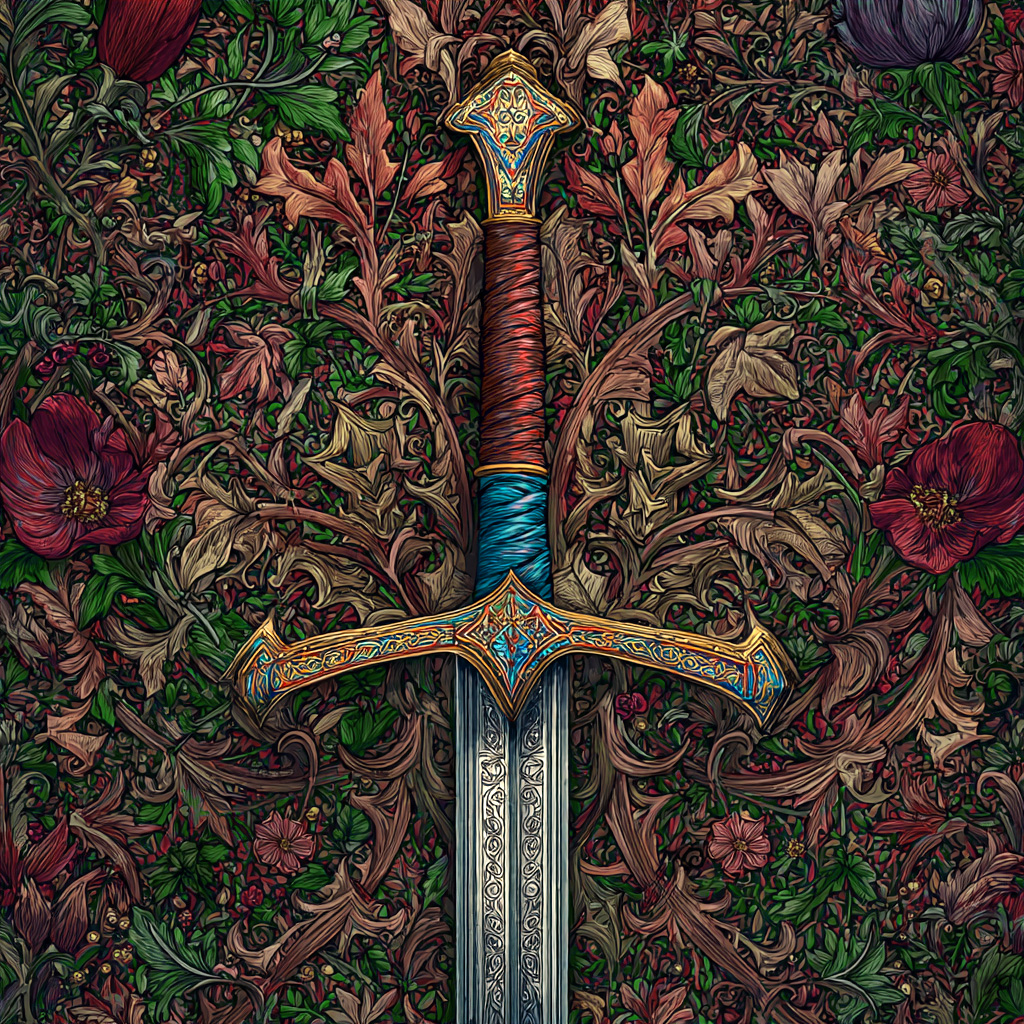
IF SWORDS COULD PROTEST their properties, the oft-misrepresented longsword would be marching with scythes and pitchforks on WotC’s headquarters. Throughout history, the longsword was the Swiss Army knife of medieval weaponry. In well-trained hands, this remarkably versatile blade could slash, stab, bash, bind, hook, and lever as the situation demanded. However, open any tabletop RPG and you’ll find this noble legacy reduced to “slashing 1d8 (versatile 1d10)”—barely more thrilling than a crowbar and costing about the same in many systems. More on that sad state of affairs in a moment.
Bottom Line: Rename your “longswords” to arming swords and introduce real longswords with half-swording, pommel strikes, and grappling mechanics priced at at 25gp.
In fact, here’s the plain truth: what most games call a “longsword” is actually a historical arming sword wearing stolen valor. Meanwhile, the real longsword techniques go unrepresented. Half-swording, pommel strikes, and leveraged grappling are nowhere to be found on our character sheets.
Time for some truth in advertising. Referees, rename that boring 1d8 slasher what it actually is: an arming sword. Then let the longsword reclaim its rightful name and mechanics. Your historically-minded players will thank you, and medieval combat will feel more dynamic and interesting.
But first, let’s clarify what we’re actually talking about.

The Real Steel
The arming sword was a fine single-handed blade—28 to 33 inches of steel designed to work with a shield. Consequently, it was quick, maneuverable, and ideally suited for mounted combat or tight formations. Indeed, it’s an iconic knightly weapon, but it’s no longsword.
The historical longsword stretched 32 to 38 inches or more. Its extended grip transformed it into something more interesting. Fighters could wield it one-handed or two-handed as the situation demanded. Sophisticated techniques treated the entire weapon—blade, guard, and pommel—as a versatile toolkit for up-close-and-personal mayhem.
The bastard sword? There’s not much to distinguish it from a longsword (especially at the resolution of a TTRPG), and this was true historically as well. Records suggest bastard swords were only slightly longer than longswords. Therefore, treat them identically except for d8+1/d10+1 damage. They should cost 35 gp.
Now let’s examine the techniques that make the longsword truly versatile.

Half-Swording: Sword, Spear, Hammer, and more!
Long before adventurers rolled for initiative, European fighters mastered the art of half-swording. They gripped the blade with one hand to guide its tip into the chinks in enemy armor: the armpit, throat, groin, or visor slits. Armored opponents scoffed at sword-cuts. However, they quickly learned to fear the piercing blade aimed at their soft bits.
“Half-swording allows the long sword to be used like a smaller spear to defeat plate-armored opponents by attacking vulnerable gaps such as the armpits and face visor.”
— German Longsword Fighting Techniques in HEMA
Beyond precision thrusts, the longsword excelled at brutal close-quarters combat.
Smashing, Slashing, and Stabbing: The Bludgeon in Disguise
The longsword was never shy about switching from subtlety to savagery. Historical manuals depict the use of the quillons (crossguard) and pommel for brute force attacks—delivering skull-rattling blows as if the sword moonlighted as a warhammer. Knights would grasp the blade and wield the guard as an improvised bludgeon. This allowed them to bash opponents’ heads like a lucerne hammer.
Similarly, the pommel was a reliable head-knocker and jaw-smasher. Manuals show various “Mordschlag” (murder-stroke) techniques with accompanying illustrations that leave little doubt about their application.
“The pommel may be used for striking when the sword is held reversed or in close action, being especially effective at close quarters fighting.”
— Talhoffer, Fechtbuch Edition 1467
[Referees should reward creative players who wish to use the pommel of their sword in this fashion by allowing them to do so — unlike a certain celebrated influencer/gamemaster who looked at me blankly when I tried to improvise the same in their game. Oh, well… — M.]
The versatility didn’t stop with striking—the weapon’s very shape made it ideal for manipulation.
Player Hook
The longsword’s quillons could hook a knee, ankle, shield, or weapon, toppling an opponent, wrenching their defense aside, even disarming them. For example, fighting manuals such as Fiore dei Liberi’s Fior di Battaglia show that “closing distance” sometimes meant sliding down the blade towards the crossguard, wrapping around limbs, and sending foes to the dirt with an undignified crash. The longsword was a superb lever in grappling situations.
So how do our tabletop games capture this remarkable versatility?
Tabletop Games: The Great Oversimplification
So, do our beloved character sheets reflect the longsword’s true versatility? Alas, no. Most games relegate the longsword to slashing alone, its historic range of techniques lost to time.
Imagine a game where the longsword could:
- Slash: Cut through flesh and bone (albeit less effectively against almost any armor)
- Pierce: Use half-swording to find gaps in medium or heavy armors to reach vitals
- Bludgeon: Ring an opponent’s bell or deliver blunt force trauma
- Lever, Block, and Tackle: Gain an edge in grappling or wrestling
- Disarm: Use the sword to hook a grappling opponent’s two-handed weapon and potentially wrest it from their grasp.
Naturally, the Versatile weapon quality should allow increased damage when wielded two-handed (d10).
Additionally, to bring justice to armor mechanics, consider this change: The longsword should only do half damage to medium or heavy armor. The exception: when the player uses half-swording to find and exploit the gaps. As a result, the sword isn’t a one-trick pony—it’s a tactical choice.
OP, you say? Tut—a real Referee doesn’t worry about such things. There are always ways to even things up with even a modicum of creativity. Another way to help offset these newfound capabilities is to make longswords more expensive.
Longswords Cost the Same as Crowbars?!
Walk into any OSR marketplace and prepare for heartbreak: the longsword, emblem of noble chivalry and exquisite craftsmanship, costs the same as a lowly crowbar, listed at 10gp! Admittedly, this is a long-standing tradition in the OSR. This is utter nonsense, however, to players who value verisimilitude. Forging a longsword requires elite skill, premium materials, and specialized tools. Forging a crowbar is apprentice-work.
Records from 15th-century England indicate a sword could cost a pound sterling, roughly 120 days’ wages for an unskilled laborer. An unskilled laborer in Dolmenwood earns about 2 sp a day. That’s 240 sp a week. Using this as a benchmark, 25 gp seems about right for a basic arming sword. We might extrapolate that to 30 gp for a longsword and 35 for a bastard sword.
Here’s how to fix both the mechanical and economic problems:
A Selection of Swords
| Weapon | Cost (gp) | Damage | Weight | Size | Qualities |
| Arming Sword | 25 | 1d8 | 30 | Medium | Melee |
| Longsword (new) | 30 | 1d8 (1d10) | 40 | Medium | Armor Piercing, Melee, Versatile |
| Bastard Sword | 35 | 1d8+1 (1d10+1) | 50 | Medium | Armor Piercing, Melee, Versatile |
“Thrusts are employed primarily to penetrate armor gaps… In close quarters, grasping the blade enables one to direct powerful thrusts precisely.”
— Sigmund Schining ein Ringeck
Weapon Qualities
Armor Piercing: When half-swording, +2 Attack against targets wearing non-magical metal armor.
Melee: Close quarter weapon, only usable within 5 ft. of an opponent
Versatile: Can be used one-handed or two-handed. A shield cannot be used when the sword is used two-handed.
Special Maneuvers
Half-swording: Gain the Armor Piercing weapon quality (see Dolmenwood Player’s Book, p. 118) when half-swording. Note that you can’t use a shield when half-swording.
Grappling: The wielder gets a +4 bonus against any grappling opponent who is not similarly armed and trained. The bonus is a wash versus knights who are similarly armed and trained — Referees may cancel the bonus or award it to both sides, as they deem best.
Alas, Dolmenwood does not provide any rules for Grappling, but I will do so in a future post. Here’s a sneak peek:
- The Grappler declares the intention to grapple, along with a maneuver: Pin, Knockdown, Shove, Disarm.
- Both sides make a Grapple Check: Roll 1d20 + Hit Dice + Strength modifier
Example: A 4th level Fighter rolls 1d20+4+STR vs. a 2 HD Orc rolling 1d20+2+STR
- Highest total wins. The winner may choose one of the following results:
- Pin: Opponent is completely restrained and helpless (break free next round with Strength check at -2)
- Knockdown: Target is knocked to the ground and cannot take an action on their next turn (this round or next, depending on initiative order)
- Shove: Target is pushed back 10 feet and cannot take an action this round, if they have not already done so
- Disarm: The winner hooks the opponent’s weapon and yanks it from their grasp with a successful Strength Versus Strength check.
- Defender Wins: The grapple fails
- If defender won by 5+ points, all attackers are knocked back 10 feet and cannot attempt to grapple that target next round
Tie: The struggle continues—both may attempt again next round with no penalties
The Longsword vs. Armor
As compensation for these expanded abilities, consider the longsword’s limitations against armor when slashing. Almost all armor, even gambesons and leather, effectively resists cuts and slashes. Therefore, give Light armors resistance (half) to slashing attacks and immunity to Medium and Heavy armors for these types of attacks. Yes, immunity. The pedantic may allow half damage as bludgeoning instead, but armor should negate slashing damage entirely.
Of course, all this power raises an important question:
Learning the Art
Not every fighter wielding a longsword should automatically know these advanced techniques—they represent genuine martial training that goes beyond basic sword-swinging. Referees have a couple of options for introducing these skills:
Level-Based Learning: Grant one new technique per level (half-swording at 2nd level, grappling strikes at 3rd, etc.), representing the character’s growing combat experience and weapon mastery.
Mentor Training: Require players to seek out specific NPCs—retired knights, weapon masters, or surviving members of fighting schools—who can teach these techniques through roleplay and downtime training.
Manual Discovery: Scatter illustrated treatises like Ringeck’s Manual of Longsword Mastery as treasure. Each book requires a month of dedicated practice per character level to master, turning dusty tomes into genuinely valuable loot that fighters will prize above gold.
This approach makes longsword mastery feel earned rather than automatic, adding depth to character progression while giving referees new tools for adventure hooks and meaningful rewards.
The short-shrift of the longsword in tabletop gaming isn’t merely a question of missed potential—it’s a tragic loss of combat options and creative gameplay. Let players slash, bash, stab, and hook to their heart’s content, turning every combat into a steely dance of possibilities worthy of Talhoffer’s manual. Let the price reflect its elite status, and when your players discover that real longswords require real investment? Well, suddenly that family heirloom blade feels properly precious.
With these changes, your knight’s longsword becomes what it always should have been: not just another damage die, but a tactical toolkit worthy of its legendary status.
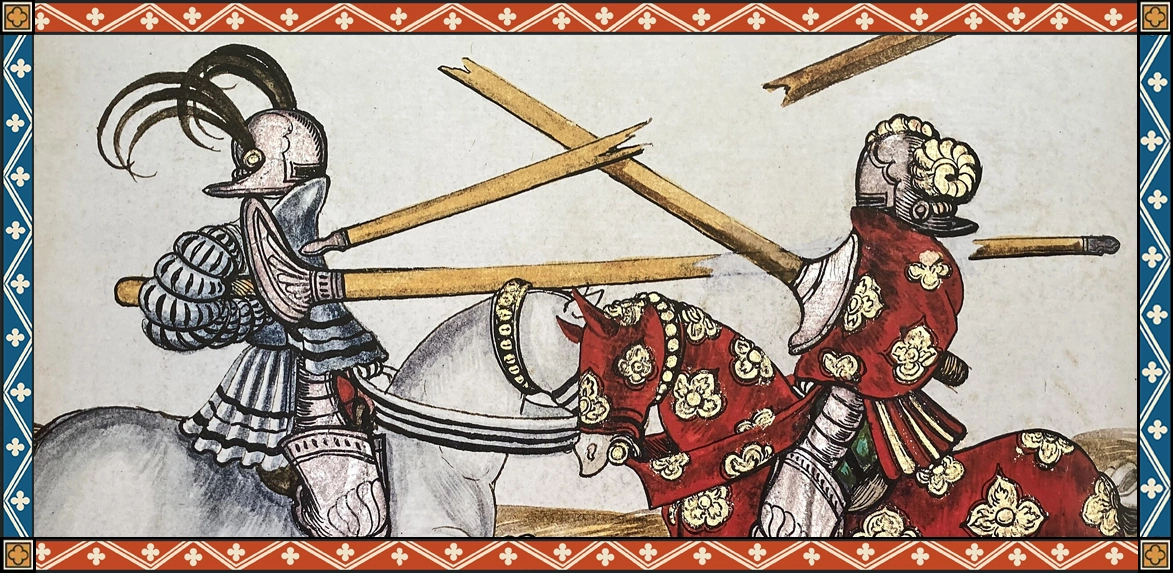
If you enjoyed this article, you’ll love Knights of the Wood: The Duke’s Tourney. It covers everything you need to know about knightly tournaments—jousting, mêlées, hunts, feasts, and courtly intrigue. Designed for Dolmenwood but easily adapted to any OSR game or even D&D 5e.
Sources
- Wiktenauer (the free library of HEMA: Historical European Martial Arts)
- The Armarium ( by ARMA: The Association for Renaissance Martial Arts)
- German Long Sword Fighting Techniques (by HEMA)
- Fiore Favorites – Longsword Techniques Swap